Permanent exhibition
- Location
- Herinneringscentrum Kamp Westerbork
The permanent exhibition at the Camp Westerbork Memorial Centre tells the story of the site of Camp Westerbork through personal accounts. These include stories of people who were deported via Camp Westerbork, as well as those of guards, train drivers, neighbours and people who helped Jews go into hiding or escape.
Durchgangslager
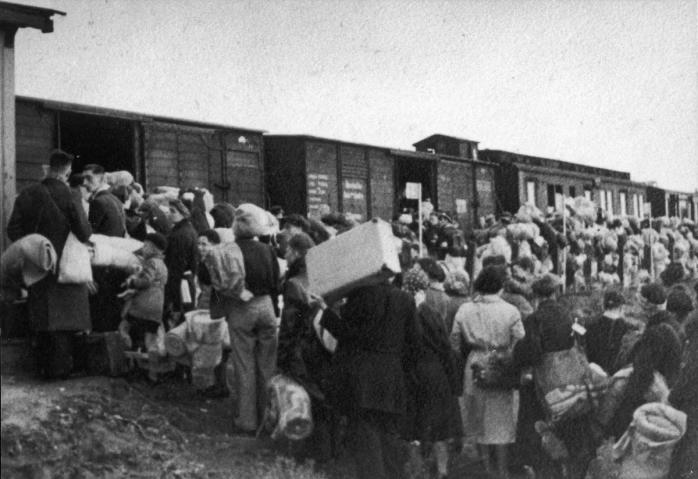
In the summer of 1942, Camp Westerbork camp became a transit camp: the place where Jews from all over the Netherlands were gathered to be deported from there to the concentration and extermination camps. This was the final stage of the persecution of the Jews. The exhibition follows the story of the persecuted men, women and children from the moment they were taken from their homes. Some stayed only briefly in Westerbork, others remained in the camp for months or even years.
Camp Westerbork had a single purpose: to ensure the efficient running of the deportations. Between July 1942 and April 1945, more than 100 trains departed. Film footage shot in May 1944 shows one of these transports and can be viewed in the exhibition. In total, over 107,000 people were deported from Westerbork; 102,000 of them were murdered. Audio clips feature the memories of survivors, which paint a harrowing picture of life in Camp Westerbork.
Post-war period
Camp Westerbork was liberated on 12 April 1945, but the site remained in use. Just a few weeks after the liberation, the camp was put into use as an internment camp for Dutch nationals suspected of collaboration. This lasted until December 1948, after which Camp Westerbork served as accommodation for military personnel and, in 1950, became a repatriation camp for repatriated Dutch Indonesians.
'Woonoord Schattenberg'
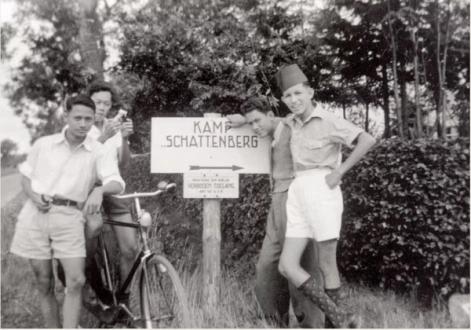
For the longest period in its history – from 1951 to 1971 – Camp Westerbork served as the Schattenberg residential camp, where several thousand Moluccan KNIL soldiers and their families were housed.
On 21 March 1951, the first Moluccans arrived in the Netherlands; upon arrival, all soldiers were discharged. On 22 March, several hundred of them arrived in Schattenberg. In total, around 13,000 Moluccans came to our country. A return to the Moluccas never materialised.
What happened next
After that, more and more of the former transit camp disappeared: huts were demolished or sold. In 1970, the Westerbork Synthesis Radio Telescope was commissioned on the site. In 1983, the Camp Westerbork Memorial Centre opened its doors, following an initiative by survivors and relatives.
The exhibition is suitable for all ages. A guidebook is available for children aged 7 and over.